Sustainable Packaging + Label Compliance in India (2025–26): A Brand Checklist Before You Scale”
In July 2025, India notified the Cosmetics (Amendment) Rules, 2025, bringing greater clarity to areas that directly affect cosmetic labels and compliance systems.
Key clarifications include:
Clear interpretation of “Use Before” vs “Expiry Date”
Updated guidance on record retention, including acceptance of electronic records
Greater alignment with Legal Metrology and BIS-linked packaging and labelling standards
These updates may look subtle on paper—but for scaling brands, they significantly impact how labels are designed, how SKUs are documented, and how audits are handled.
Practical takeaway: Labels and documentation must now be precise, consistent, and audit-ready, especially if you plan to scale across states, sales channels, or international markets.
The 2026 Packaging Story: What Consumers Expect Now
Modern personal care consumers don’t separate sustainability from experience—they expect both.
The strongest packaging trends shaping 2025–26 include:
Recyclable or mono-material packaging wherever possible
Minimal outer packaging for less waste and cleaner unboxing
Refill concepts for frequently used products like shampoos, body washes, and lotions
Premium-but-simple aesthetics: clean typography, calm colours, and clutter-free layouts
But sustainability alone isn’t enough.
Packaging must also survive real-world conditions—heat, transport, storage, and last-mile delivery. If bottles leak, crack, or warp, returns spike and reviews suffer. True sustainability balances environmental intent with functional performance.
India Compliance Checklist (Brand-Friendly)
Before scaling, every brand should walk through this checklist with its Third Party Cosmetic Manufacturing partner:
1. Date Marking Clarity
Ensure Use Before or Expiry Date is applied correctly and consistently across all SKUs, as per clarified interpretations.
2. Batch Coding & Traceability
Batch codes must clearly link to manufacturing records. Strong traceability reduces risk during customer complaints or regulatory audits.
3. Records Retention (Digital Allowed)
The 2025 amendments confirm that records can be maintained digitally or in hard copy, and must be retained for periods linked to product expiry.
4. Claims Hygiene
Avoid drug-like or therapeutic promises. Cosmetic claims should remain focused on appearance, feel, and cosmetic benefits—this also protects ad approvals and marketplace listings.
5. Packaging Compatibility Testing
Actives, essential oils, and certain preservatives can interact with plastics. Compatibility testing is essential to prevent leakage, discolouration, or degradation over time.
Where AHPL Labs Fits into the Workflow
AHPL Labs positions itself as a partner offering:
Custom cosmetic formulation
Third-party manufacturing
Customised designing and packaging
Experience across a large product range
Capability to support global servicing and scale
For founders, working with a structured manufacturer simplifies growth:
Reduced back-and-forth between multiple vendors
Early feedback on packaging feasibility
Consistent labelling templates across product lines
Scalable production without changing the brand’s look and feel
This alignment becomes especially valuable when expanding beyond a single hero SKU.
Sustainable Packaging Ideas That Also Work Commercially
If your goal is sustainability and conversion, consider these proven formats:
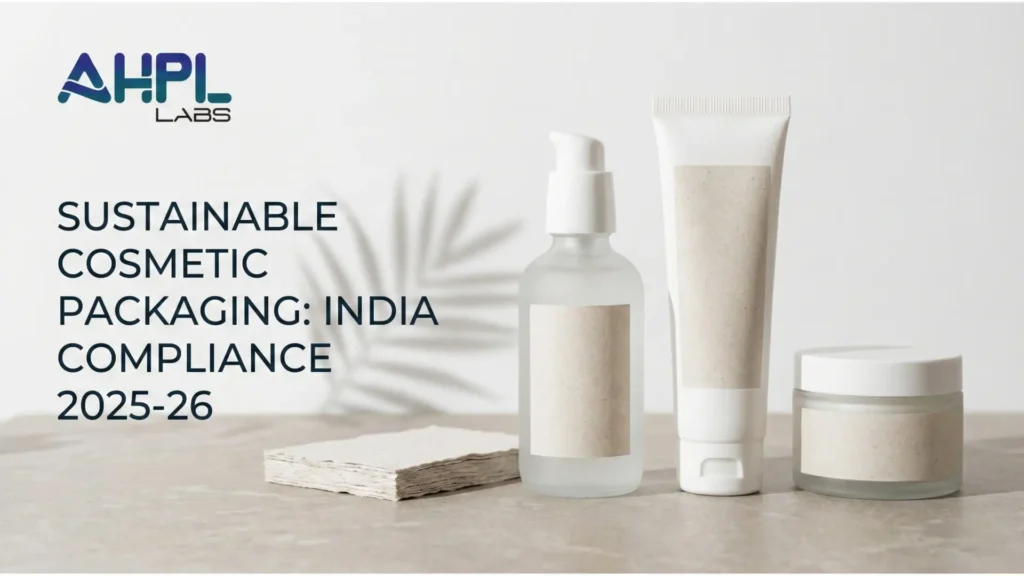
Premium PCR (post-consumer recycled) bottles paired with clean, minimal labels
Minimalist cartons only where required by regulation or retail shelf impact
Refill pouches for repeat-purchase categories
Travel-size minis, which reduce waste for first-time users and improve sampling ROI
Smart sustainability doesn’t just reduce footprint—it improves repeat purchases and customer trust.
Bottom Line
In 2025–26, packaging is no longer just about design. It’s a combination of compliance, customer trust, durability, and retention.
Brands that invest early in compliance-ready labels and sustainability-forward packaging scale faster—and face fewer operational fires later.
Partnering with AHPL Labs for third-party cosmetic manufacturing helps align formulation, packaging, and documentation within a single execution framework—making growth smoother, safer, and more predictable.